
World War II changed everything – including drums.
Metal was suddenly a strategic material, and American drum companies had to reinvent their instruments almost overnight. Ludwig, Slingerland, WFL and others all came up with “90 percent wood” solutions that could still be sold to civilians while respecting wartime restrictions.
For Leedy, that wartime answer has a name: the Leedy Dreadnaught (often spelled Dreadnought in modern writing). It is Leedy’s wooden wartime workhorse – a street / parade drum family built with wooden lugs, wooden hoops and just enough metal to keep everything under tension.
In this article, I’ll walk you through the historical background, construction and sound of the Leedy Dreadnaught, and I’ll also introduce my own Dreadnaught kit, which you can see in the photos here on the blog. Along the way I’ll connect to related articles on my site, so you can dive deeper into Leedy history, wartime drums and natural drumheads.
When drums had to be 90 percent wood
From 1942 till 1945, U.S. government restrictions on metal use hit drum builders hard. Period lug guides and wartime catalogs show that drum production was drastically reduced and that “all drum companies offered their own special drums composed of 90% wooden parts.”
In practical terms, that meant:
- Metal lugs were replaced with wooden lugs
- Standard hoops became wooden counterhoops
- Stands and accessories were simplified or partially made of wood (very rare)
If you’ve already read my article on Slingerland’s Rolling Bomber here on the blog, you’ve seen how Slingerland solved this problem with heavily wooden hardware. The Leedy Dreadnaught sits in exactly the same historical window – Leedy’s own interpretation of a mostly wooden, fully professional wartime drum.
What is the Leedy Dreadnaught?
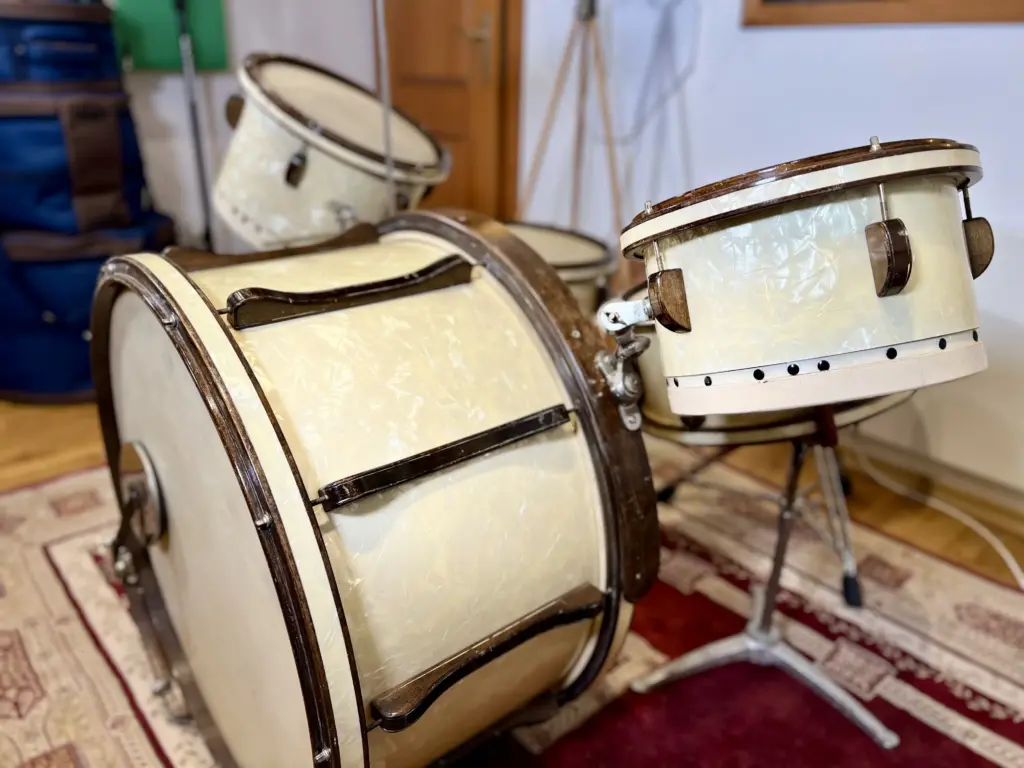
The Dreadnaught is Leedy’s World War II “restriction” model – a family of bass drums, snares and tom-toms built with wooden hardware and natural heads.
In surviving lug charts and identification guides, the Dreadnaught is shown as a classic example of a World War II Leedy with wooden lugs, illustrating how the company adapted its hardware when metal became scarce.
A few key points that define the model:
- It is a wartime Leedy design, produced during the years when metal restrictions were in force
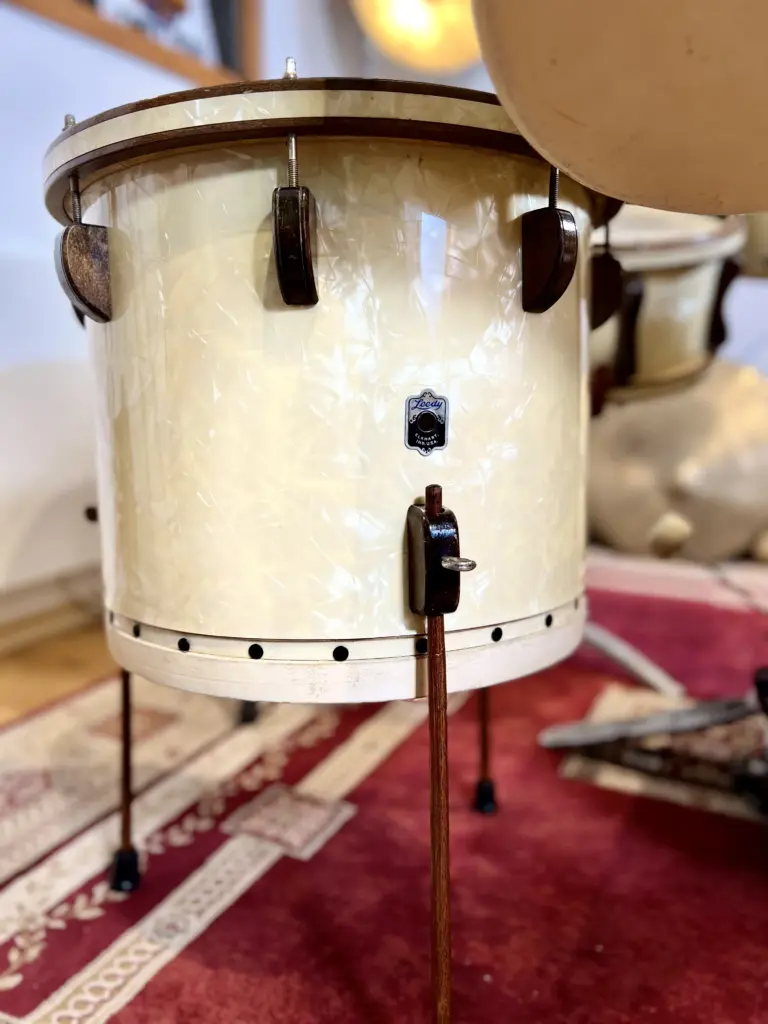
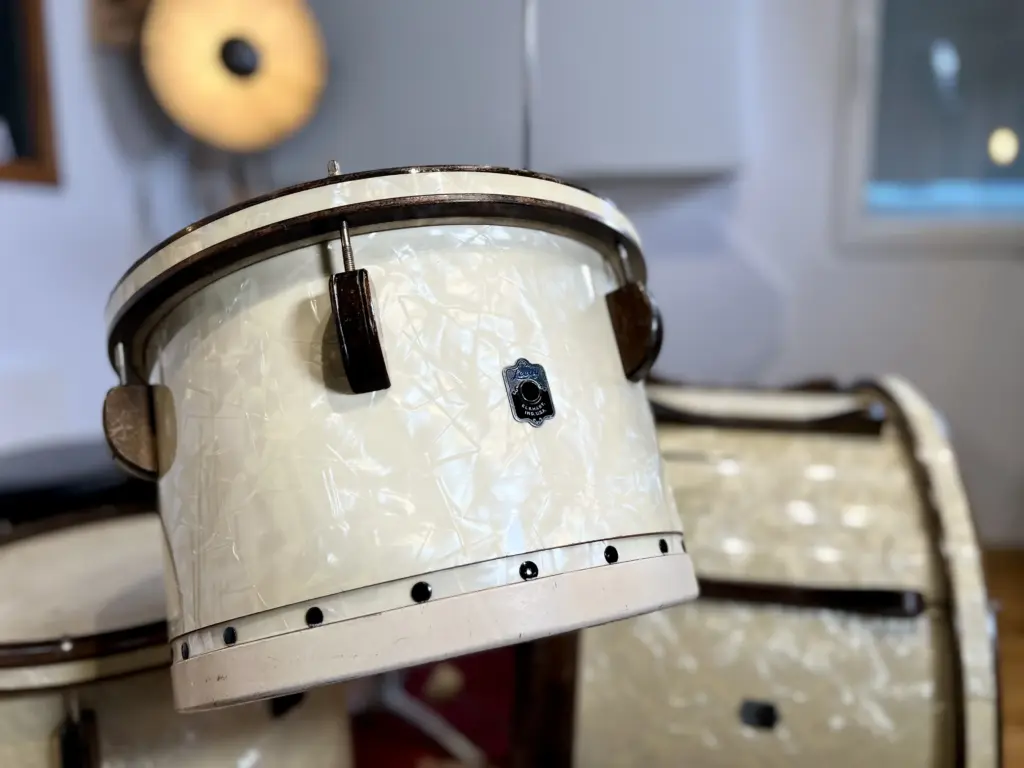
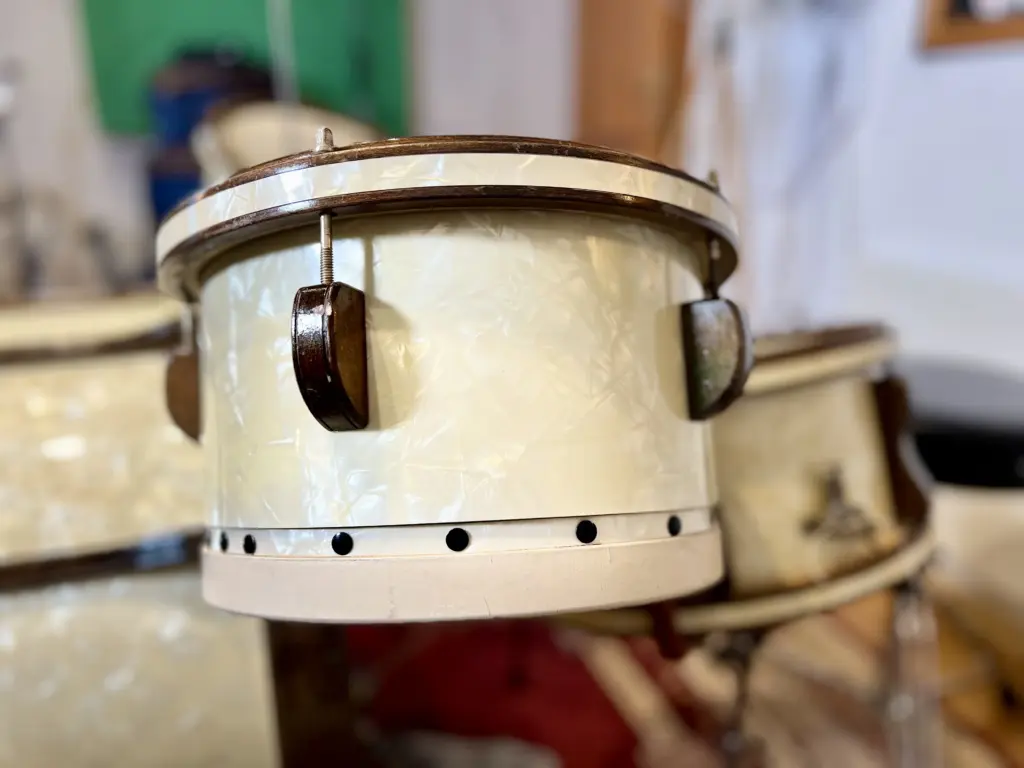
- It features wooden lugs in place of the usual metal beavertail lugs
- It uses wooden hoops, often on visually striking finishes like White Marine Pearl
- Dated examples of Dreadnaught kits place the model firmly in the mid-war period around 1943–1944
The result is a drum that is unmistakably Leedy in its proportions and shell construction, but visually and conceptually different from the brand’s pre-war catalog models.
Construction – wood where you normally see metal
From a construction standpoint, the Dreadnaught is a perfect snapshot of wartime engineering.
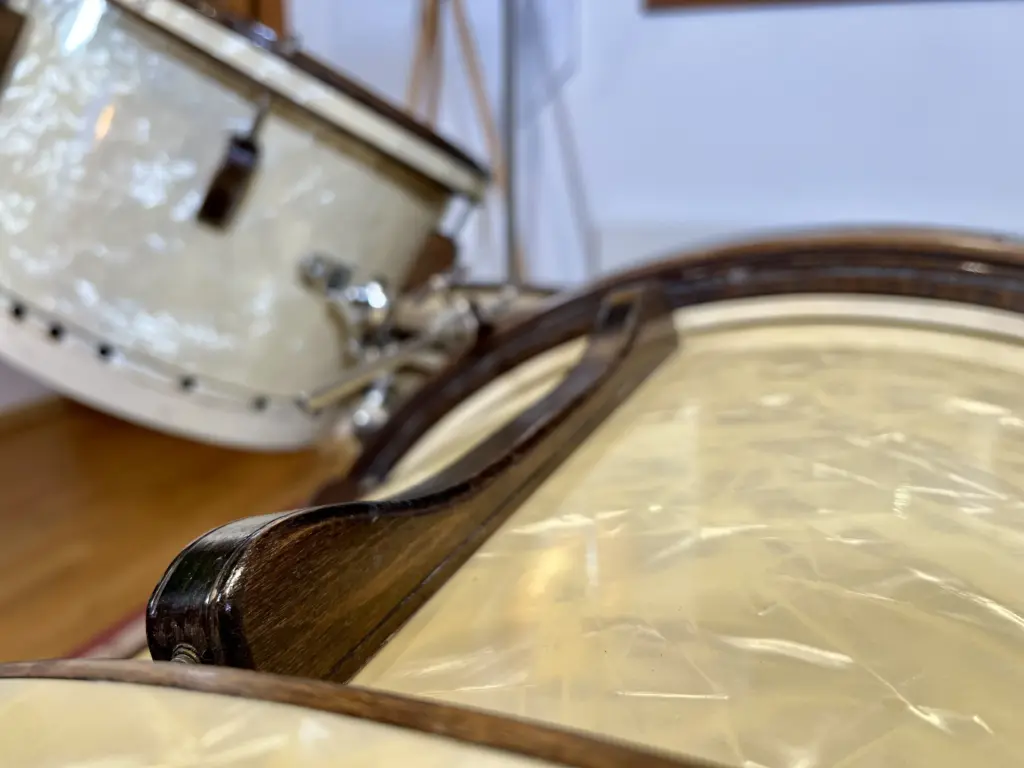
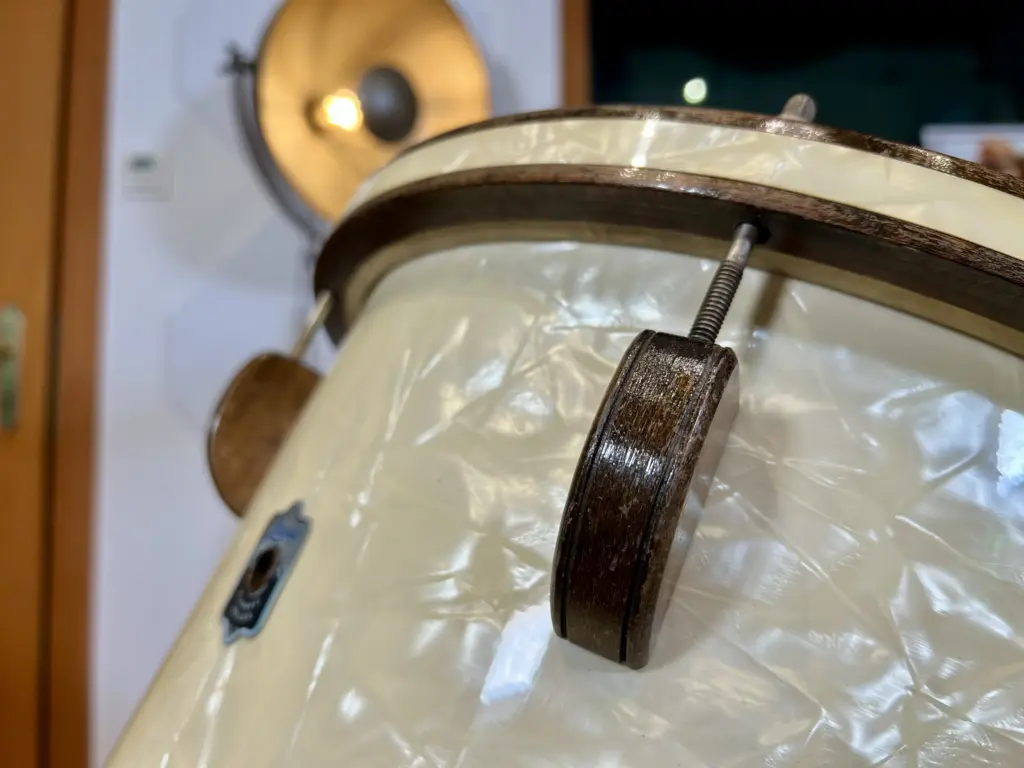
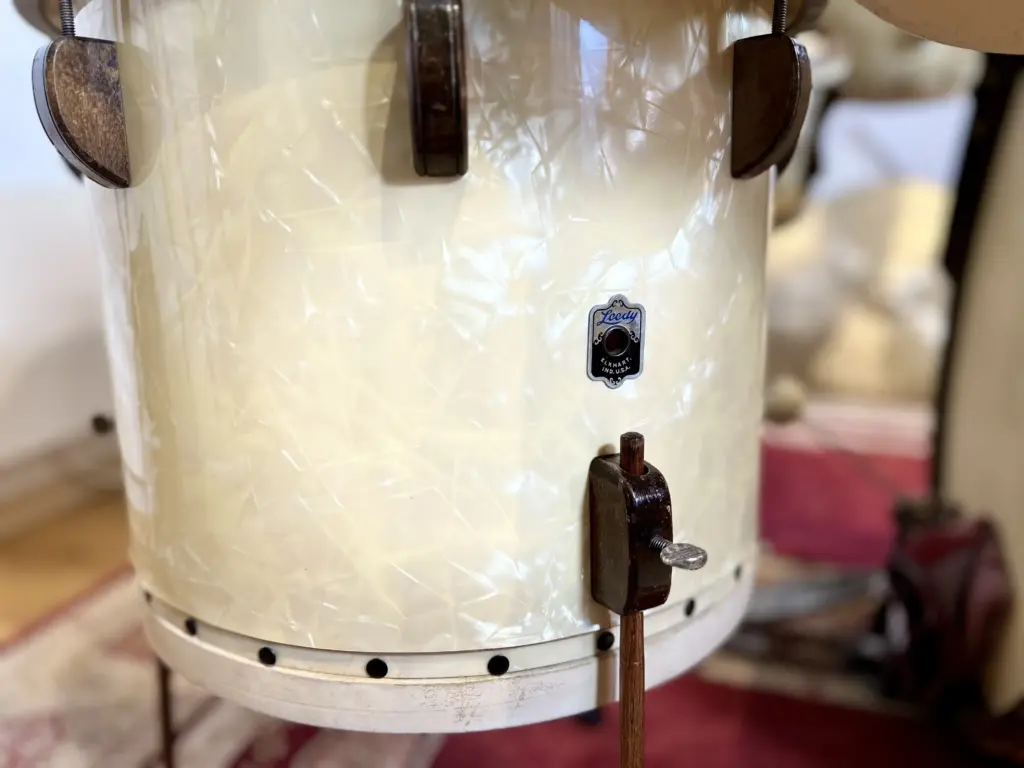
Wooden lugs
In wartime lug overviews, the Dreadnaught appears under the heading of World War II Leedy drums, with photos showing chunky wooden lugs mounted directly to the shell.
Compared to the elegant cast-metal X-lug and beavertail lug Leedy used from 1939 onward, these wooden blocks look almost brutalist – but they did exactly what the law required: they kept metal use to a minimum while still allowing normal tension rods.
Wooden hoops and tensioning
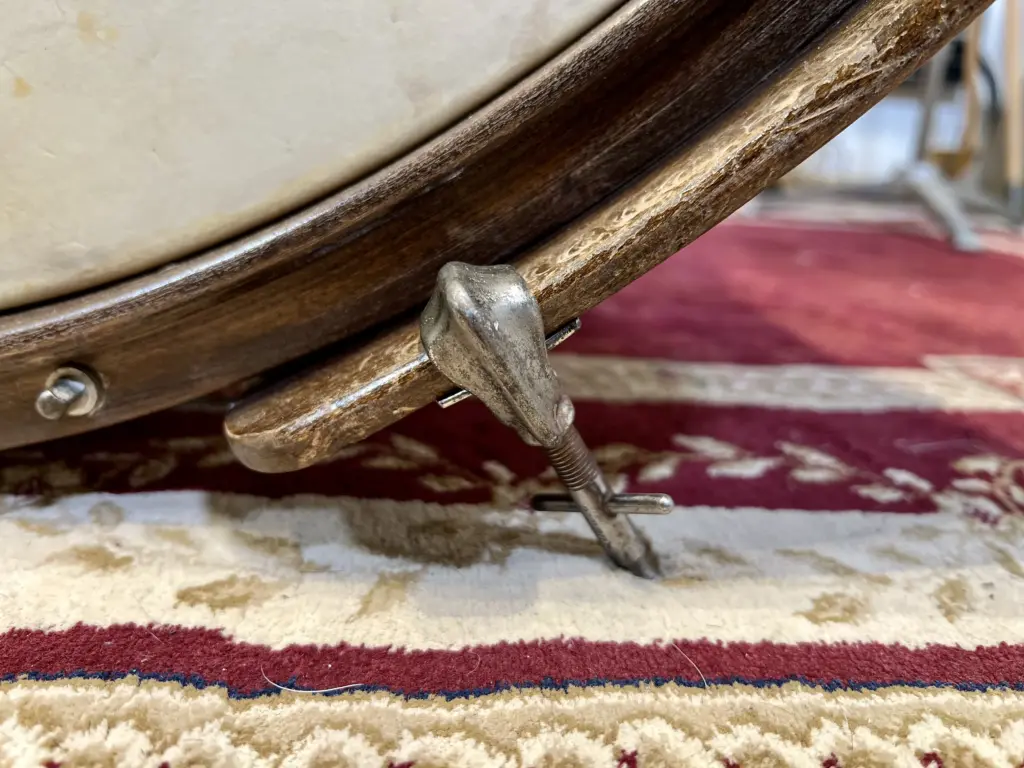
Like other wartime drums, Dreadnaughts use wooden counterhoops instead of metal. As you can see, the tension rods go directly into the wooden hoops (compared to the Rolling Bomber which still used metal claws).
Under the hardware, you still have classic Leedy shells of the early 1940s. Finishes include typical Leedy wraps – and that brings us to the set you see in the photos here.
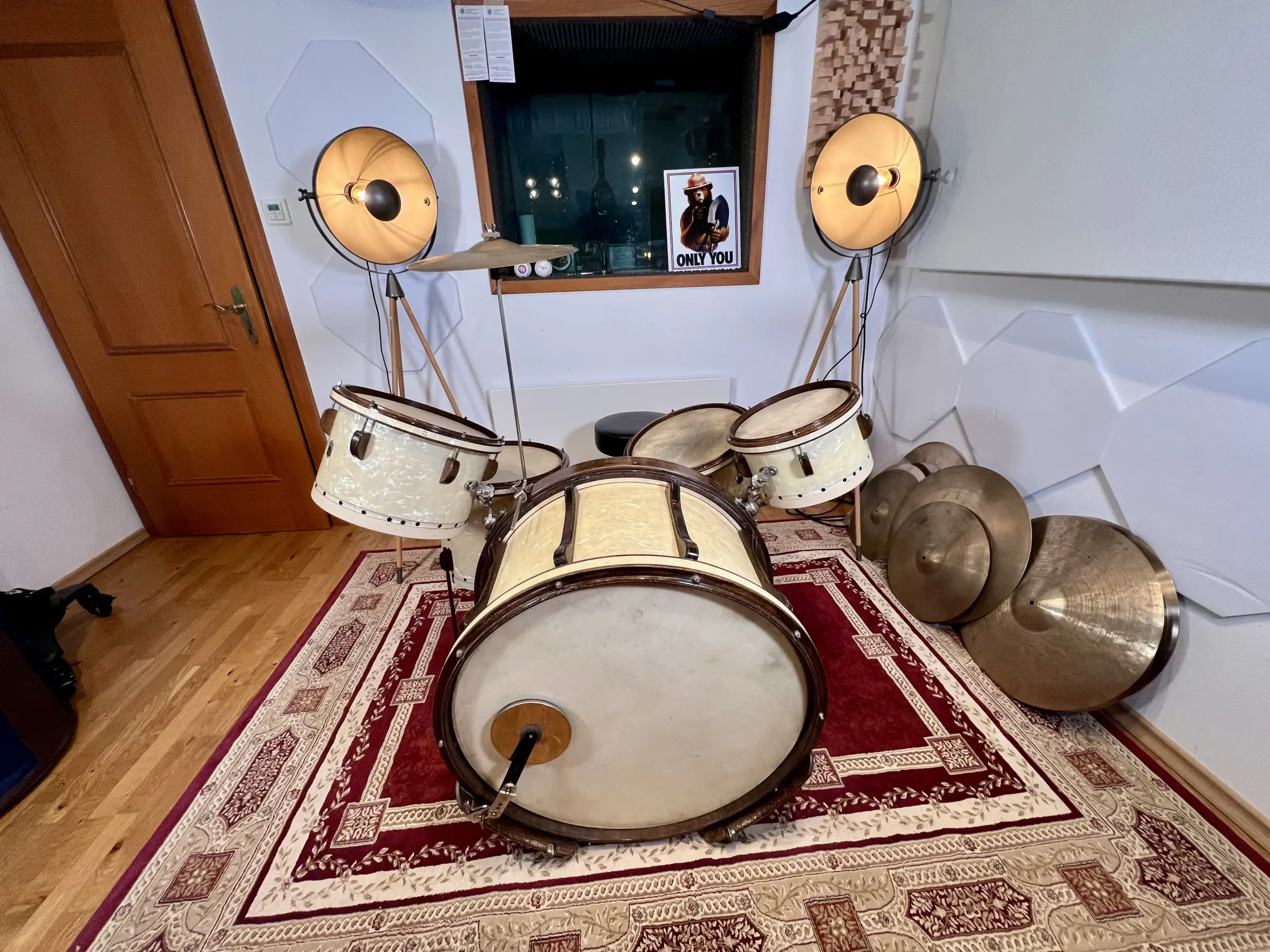
My Leedy Dreadnaught kit
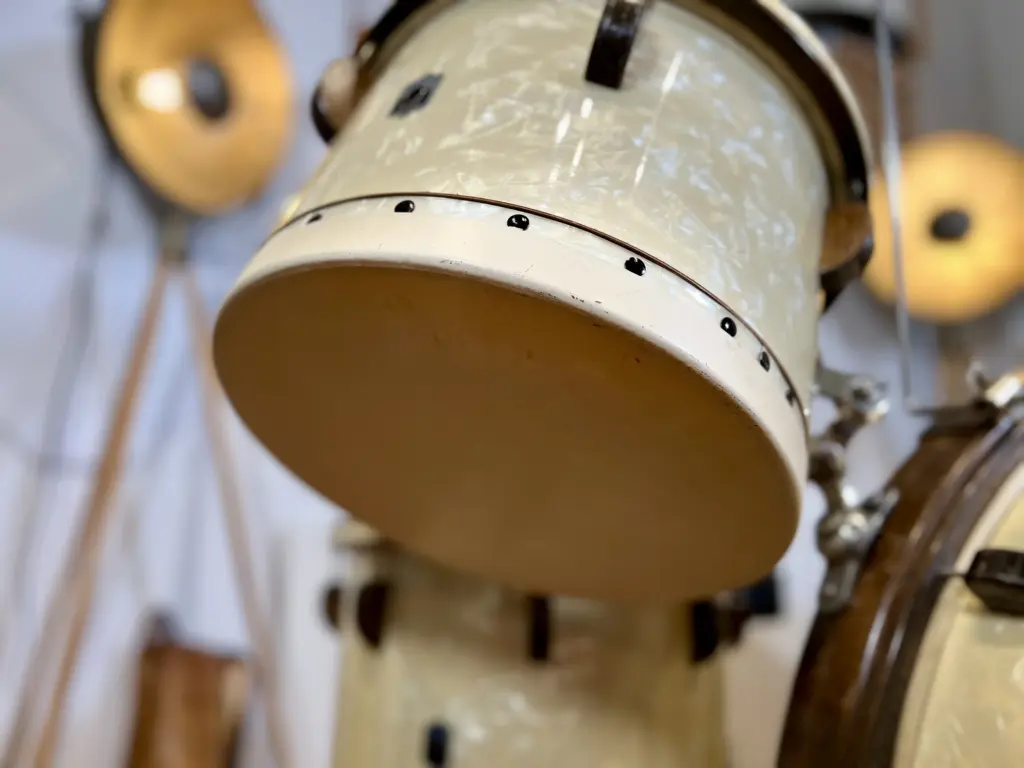
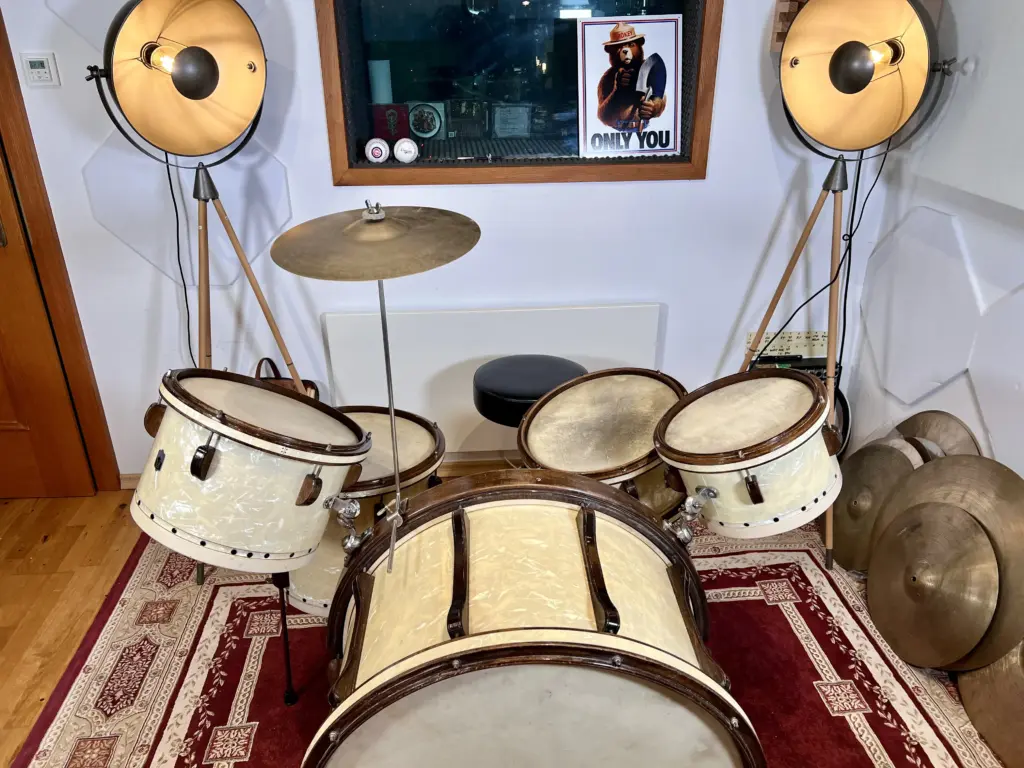
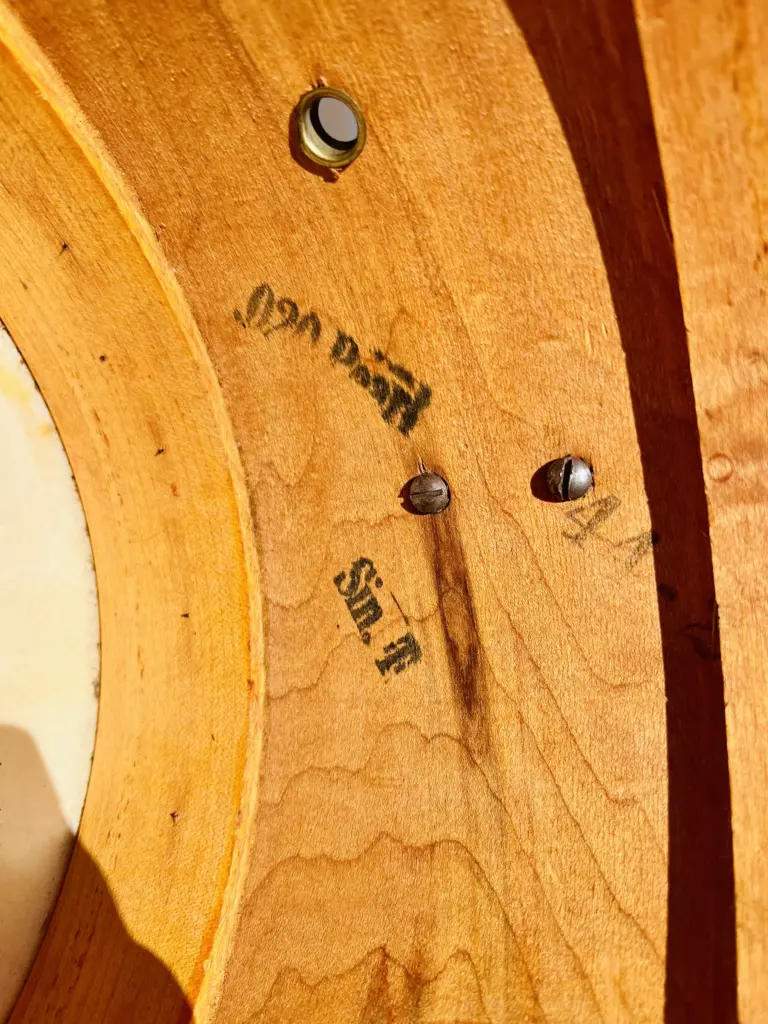
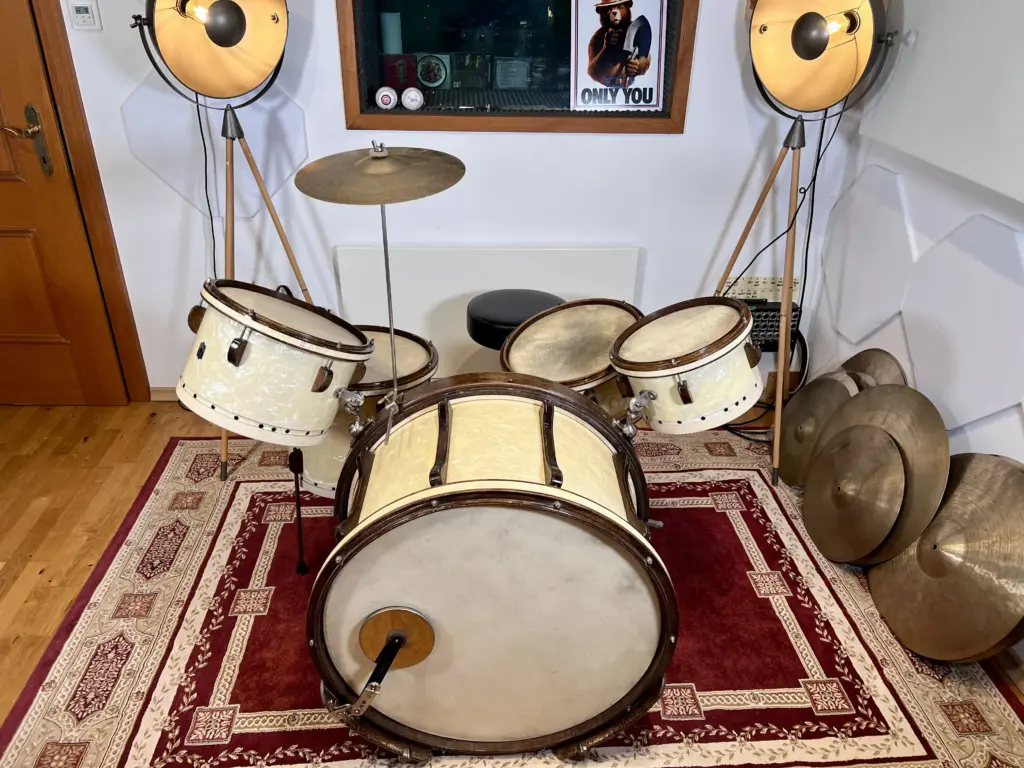
The Dreadnaught kit in the photos on this page is my own WWII Leedy set from 1944 (you can see the „44“ date stamp on the inside), finished in beautiful White Marine Pearl. The configuration:
- 11″ tom
- 13″ tom
- 15″ floor tom
- 26″ bass drum
- 14″ snare drum
All drums still wear their original calfskin heads, which is unusual and a big part of why this set feels like a time capsule.
I purchased this kit from Joey Mekler, and since then it has become one of the centerpieces of my collection – the sort of set you not only admire as a historical object, but also actually play to understand how mid-1940s Leedy drums really sounded.

Sound – a warm, wooden wartime voice
There aren’t a lot of technical measurements in the surviving literature about Dreadnaught drums, so what follows is based on how these kits behave in the real world – especially when you keep them close to their original specification with calfskin heads.
A few sonic characteristics stand out:
- Wooden hardware = less metallic “bite”
With wood lugs and hoops instead of metal, there is less dense metal attached to the shell. The drum feels a bit more “alive” and resonant in the low and midrange, with a slightly softer attack than a comparable pre-war Leedy with metal hoops and beavertail lugs. - Calfskin heads = classic 1940s tone
All original Dreadnaughts were meant to be played with natural skins. In my broader article on the history of drumheads here on the blog, I go into detail about how calf reacts to humidity, touch and tuning. On a Dreadnaught, calf adds a dry, throaty warmth that suits march tempos and open, swinging patterns equally well. - Music from that time
Remember what kind of music was played through the 30`s and 40`s. Swing, Dixieland, mostly with wind insruments. Also, there was no amplification, and drums didn`t have to be as loud as they needed to be later on.
If you’re used to modern plastic heads and metal hardware, sitting behind a Dreadnaught – especially a large kit like 11/13/15/26 – really feels like stepping into a different era of response and tone.
Collecting, restoring and playing Dreadnaught drums today
Because of their limited production window and the fragility of wooden hardware, Leedy Dreadnaughts are not common. Wartime Leedy catalogs are thin and hard to find, and many drums simply didn’t survive the last decades.
If you’re lucky enough to own or find one:
- Treat wooden lugs and hoops with respect – they can crack, warp or delaminate if handled roughly or stored poorly.
- Think carefully about head choice. On this blog I’ve written in detail about natural drumheads and how to care for them. If you want to stay close to the original voice, calfskin is still the most authentic partner for a Dreadnaught.
- Consider the drum’s historical value. Many collectors set up a compromise: original calfheads for display and photos, plus a second set of heads for regular playing and studio work.
In my own collection, the Dreadnaught kit you see here fills a very specific role: if I need that dark, wooden, 1940s sound under natural heads, this kit is shortlisted.
Where to go next on the blog
If the Leedy Dreadnaught has caught your interest, you’ll find a few natural next stops here on austriandrumheadcompany.at/blog:
- My Leedy history article – for the full timeline and more context around Leedy’s pre- and post-war instruments
- The piece on Slingerland’s Rolling Bomber – another wooden-hardware World War II classic to compare with the Dreadnaught
- My articles on the history of drumheads and natural head care – ideal if you’re thinking about restoring or regularly playing a wartime kit
Together, they build a small, focused corner of the internet for anyone who loves not just vintage drums, but the stories that shaped them – down to every wooden lug and calfskin head.
